01
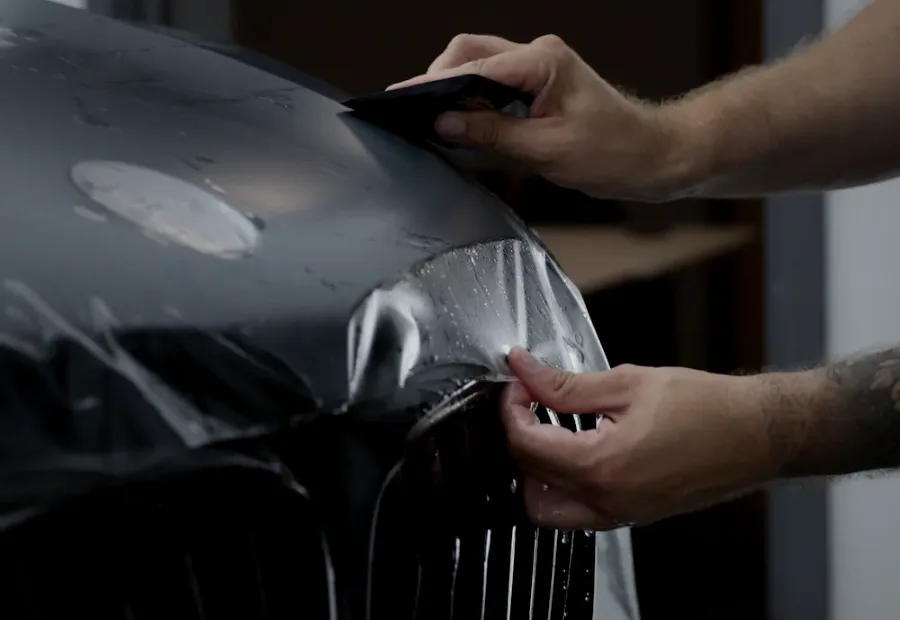
Paint Protection Film
New XPEL film, computer-cut and fitted indoors. Most removals are booked with a refit.
Learn morePaint Protection Film Removal in Jacksonville, FL
Aged, yellowed or lifting paint protection film removed with controlled heat, then every trace of adhesive taken off and the paint underneath inspected and put right.
What it is
Anybody can get a corner up and pull. What decides whether your paint survives is the temperature it comes off at and what happens to the glue left behind.
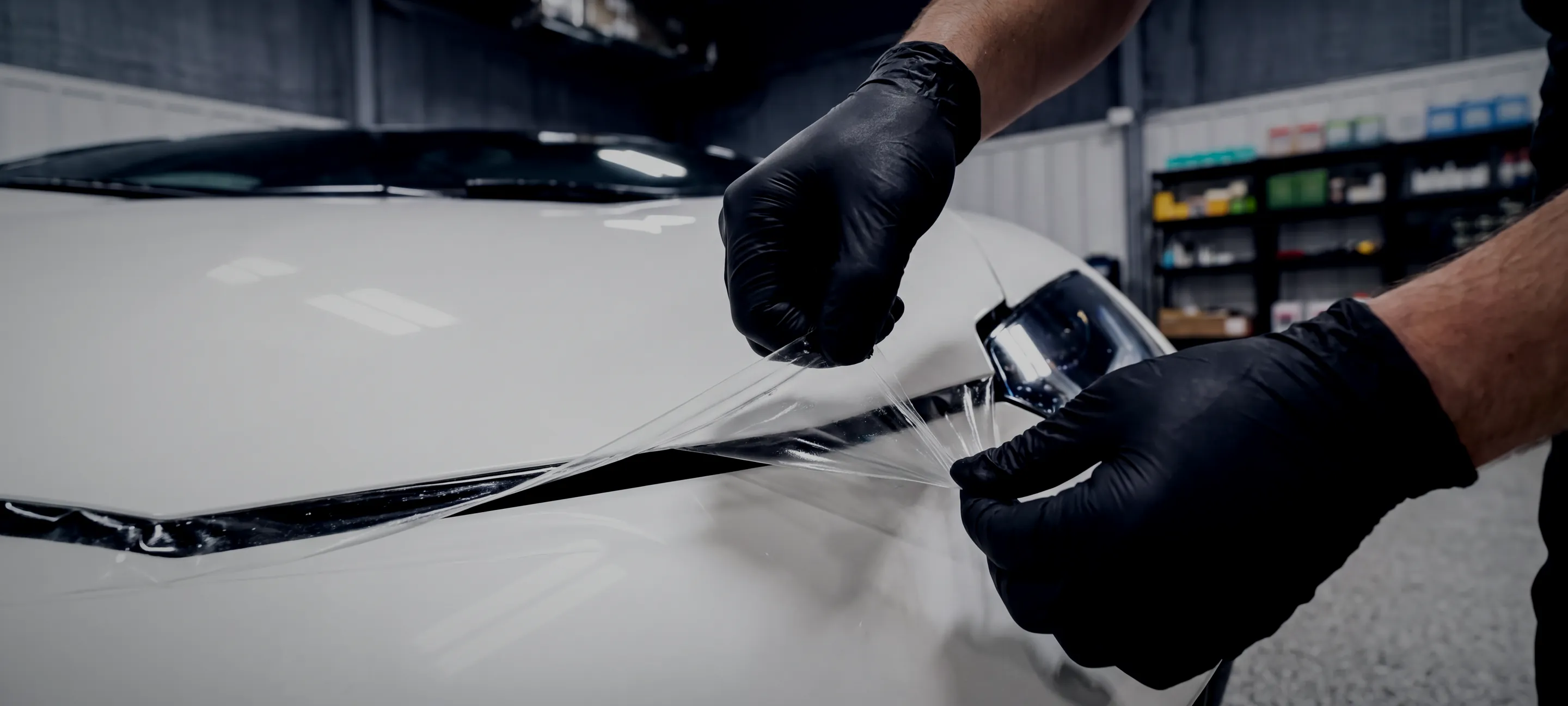
Paint protection film has a service life. Older films yellow, and film of any age that has been through enough Florida summers gets brittle. At that point it stops coming off in sheets and starts coming off in pieces.
Removal is slow work by design. The film is warmed to the point where the adhesive releases rather than tears, pulled back over itself at a shallow angle, and the residue is dissolved off rather than scraped.
The part people do not expect: the paint under old film is very often in better condition than the paint around it, because it has been covered the whole time. That difference can be visible once the film is off, and it is one of the reasons the paint gets looked at properly afterwards rather than just washed.
Film releases at a temperature. A climate-controlled bay is how you get that temperature evenly across a panel instead of in a hot spot under a gun.
Residue is dissolved and lifted, panel by panel. Nothing is scraped off with a blade near an edge or a chip.
Once the film is off, the paint underneath is checked under the light bar and you are shown what is there — including anything that was already under the film.
A full front end in good condition is a different afternoon to a full car in brittle ten-year-old film. Rushing removal is what damages paint.
Before you book
Most people asking about removal are actually deciding between two different jobs.
C
oThe process
How brittle the film is decides how the rest of the day goes. Yellowed, cracked or lifting film comes off in pieces and is quoted accordingly.
Evenly, across the panel. This is the stage that protects the clear coat, and it is the stage a heat gun in a driveway gets wrong.
Pulled slowly and flat rather than up. At edges, chips and stone damage the pace drops again, because that is where paint lifts.
Residue is chemically softened and wiped away. No blades, no abrasive pads, nothing that can mark the clear coat that was just uncovered.
The paint is washed, decontaminated and looked at properly. You are shown what is there before any decision about correction or new film.
Questions
Removal done at the right temperature, on factory paint in sound condition, should not. The risks are real and worth naming: brittle old film, paint that was already chipped under the film, and repainted panels, which do not always hold adhesive as well as factory paint. Anything we find gets shown to you rather than discovered later.
Yes, and it is the most common reason people call. Brittle film tears instead of stretching, so it comes off in small pieces and the whole job takes considerably longer. It is still removable — it is just an afternoon rather than an hour.
You can get it off. The two things that usually go wrong are scorching the clear coat with a heat gun and leaving adhesive behind, which then hardens and holds dirt. Removing old hardened adhesive is a worse job than removing the film was.
Sometimes. Paint under film has been shielded and paint around it has not, so after years there can be a visible difference at the edge. It is a paint condition difference, not damage, and it is what paint correction is for.
Yes. Nothing bonds properly over old film or old adhesive. If new film or a wrap is the plan, book the two together.
Next
New XPEL film, computer-cut and fitted indoors. Most removals are booked with a refit.
Learn more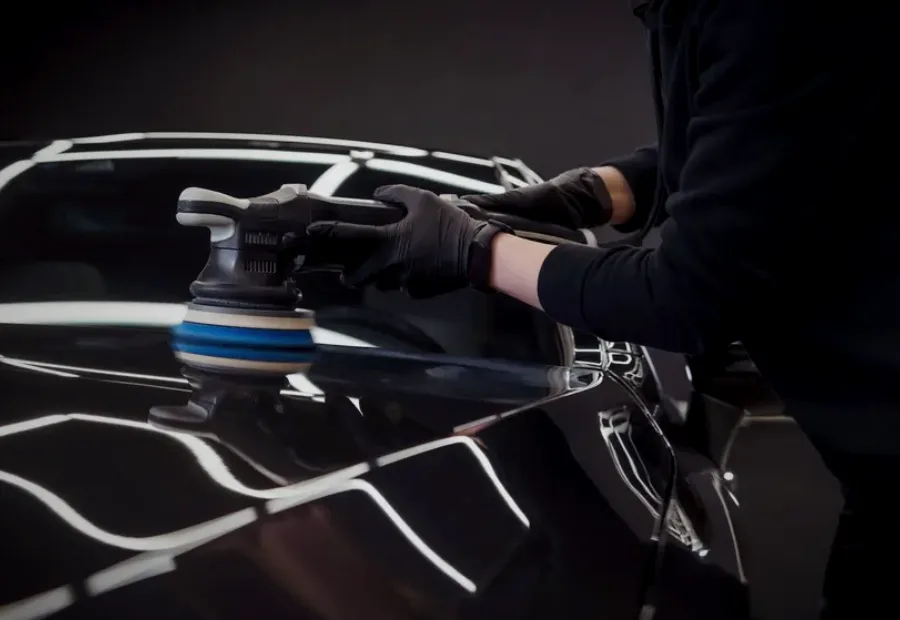
The window between film off and film on is the easiest time to correct what is underneath.
Learn more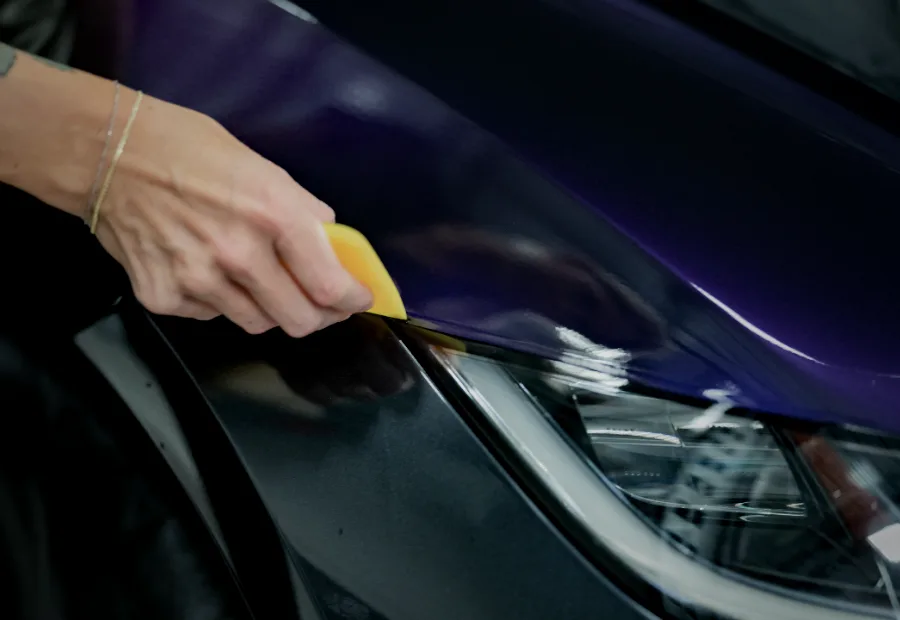
If the film is coming off anyway, a color change is fully reversible and never touches paint.
Learn moreBook
Age and condition decide the job. Fifteen minutes looking at it beats a guess over the phone.