01
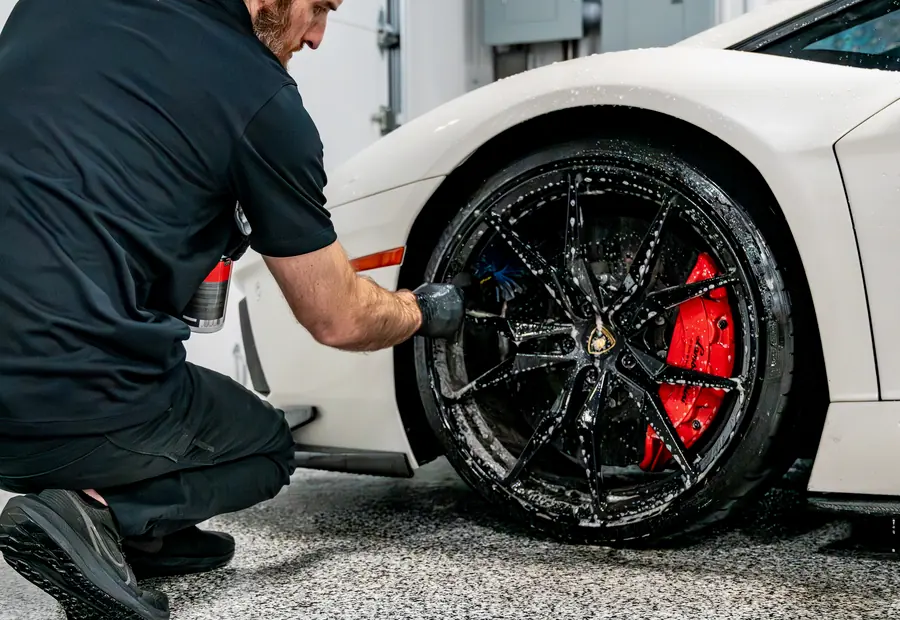
Wheel Ceramic Coating
Seal the polished faces and barrels so brake dust rinses off instead of baking on.
Learn moreMetal Polishing in Jacksonville, FL
Heat discoloration, oxidation and water spotting cut out of the metal itself, then refined until the reflection is sharp. Polished by hand and machine, indoors, on the car or off it.
What it is
A tarnished tip or a pitted wheel lip is not dirty. The surface itself has oxidized, and no chemical takes that off without removing a layer of metal with it.
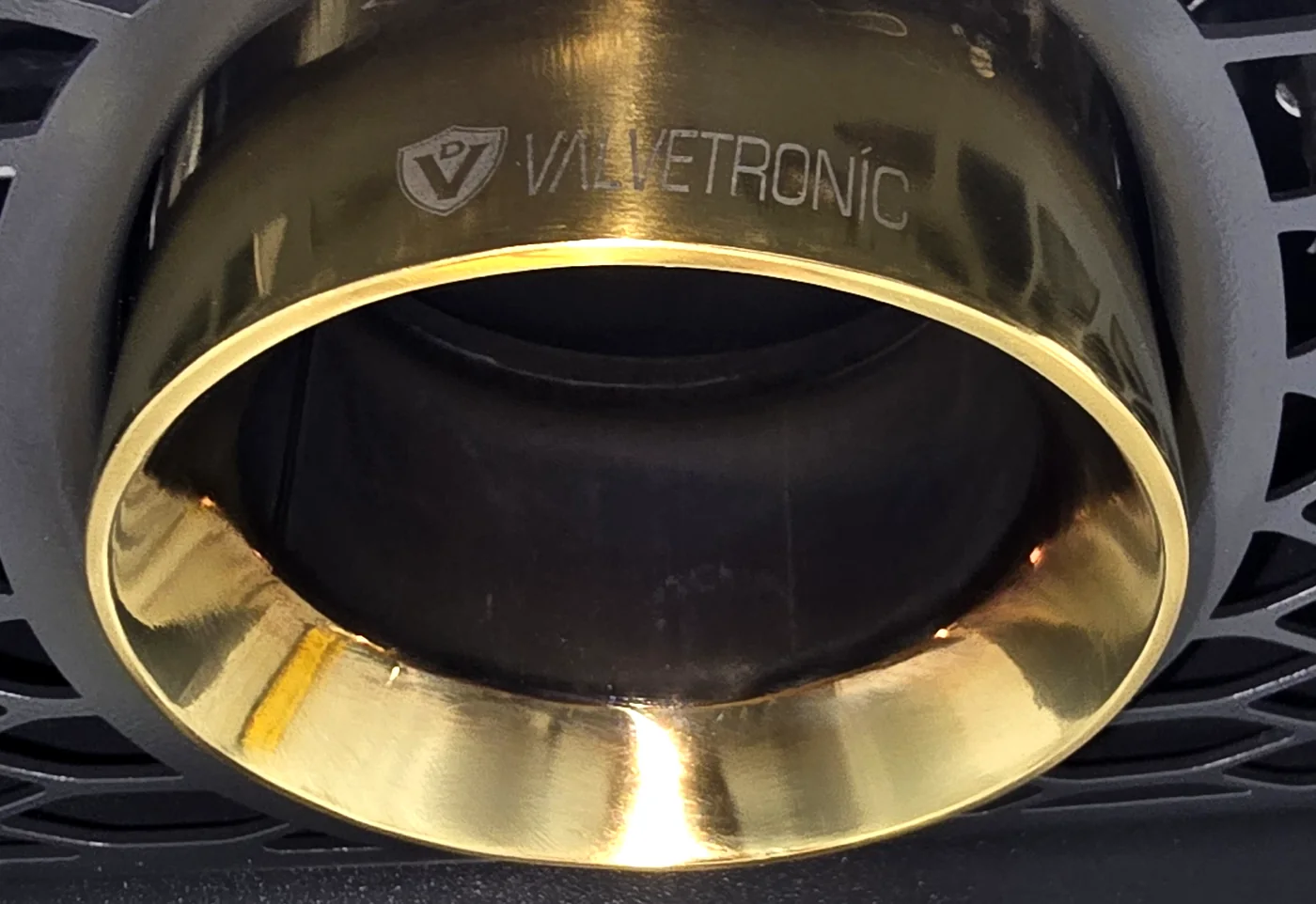
Metal polishing is a cutting process. A compound with an abrasive in it is worked across the surface, taking off a fraction of the metal and, with it, everything that had oxidized or burnt into it. Then progressively finer compounds refine what the first stage left.
That is why it works on things nothing else touches, and it is also why it has a limit. Once corrosion has gone through the surface there is nothing to polish back to.
Most of what comes through the studio is exhaust tips and wheel faces. Bodywork brightwork — trim strips, window surrounds, badges — is the same process at a smaller scale and with more masking.
Tips, trim and wheel faces are polished in place with the surrounding paint masked. Wheels come off when the barrels need doing.
A cutting stage to remove the damage, then two refining stages. One pass leaves a haze that looks bright in the bay and dull in daylight.
A tip is under an hour. A set of pitted wheel lips is is most of a day. The quote reflects the piece, not a price list.
Polishing throws fine residue. Doing it in a climate-controlled bay is what keeps it off the rest of the car and out of the paint.
Which one you want
They are usually done together, in that order, and doing them the other way round seals the tarnish under the coating.
I
fThe process
Skipping the refining stages is how metal ends up bright in the bay and hazy in the sun.
Oxidation, heat color and etching all polish out. Pitting and failed plating do not. You are told which one you have before anything starts.
Paint, rubber and plastic around the piece are taped off. Polishing compound on a painted panel is its own problem to solve afterwards.
A cutting compound on the correct pad for the metal. This is the stage that takes the damage out, and it is the one that leaves the surface hazed.
Progressively finer compounds until the reflection is sharp, then the surface is cleaned and sealed so the shine lasts past the drive home.
Questions
Usually, yes. Heat discoloration is in the top layer of the metal and that is exactly what polishing removes. What will not come back is a tip that has corroded through, or one where a coating on the metal has failed rather than the metal itself.
Not on a bare or machined face, done correctly. Painted and powder-coated wheels are a different job — those are a paint finish, not metal, and they get corrected like paint rather than polished. We tell you which yours are before starting.
For faces only, no. For barrels and the inner lip, yes — there is no way to reach the back of a wheel properly with it on the car.
That depends entirely on what the piece does. An exhaust tip gets hot again. Sealing it after polishing slows the tarnish down considerably, and a coating slows it further, but no exhaust stays mirror-bright forever without maintenance.
A single tip, often. Anything more than that is a drop-off. Book an inspection and you will get a straight answer on the day rather than a guess now.
Next
Seal the polished faces and barrels so brake dust rinses off instead of baking on.
Learn more
The wash and decontamination that goes around it. Most polishing jobs come in with one.
Learn more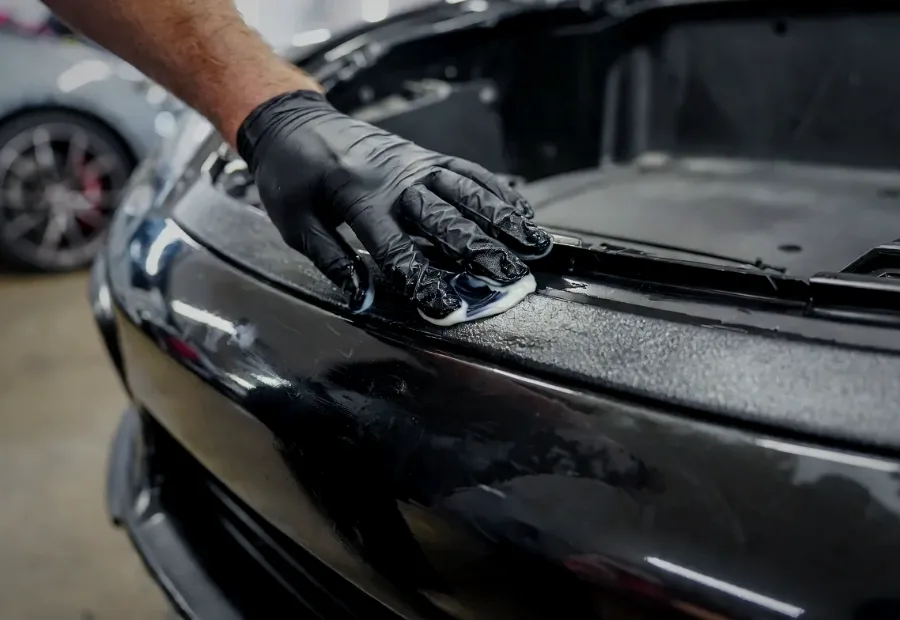
The same idea for the plastic. Faded trim brought back to black and sealed.
Learn moreBook
Most exhaust and trim jobs can be quoted from a picture. Wheels we would rather see.