Auto Detailing & Paint Protection in Jacksonville Beach, FL
Salt air is doing something to your paint right now.
Detail Geex is about twenty minutes west of Jacksonville Beach on St Johns Bluff Road — a fully indoor, climate-controlled studio for cars that live within a mile of the ocean.
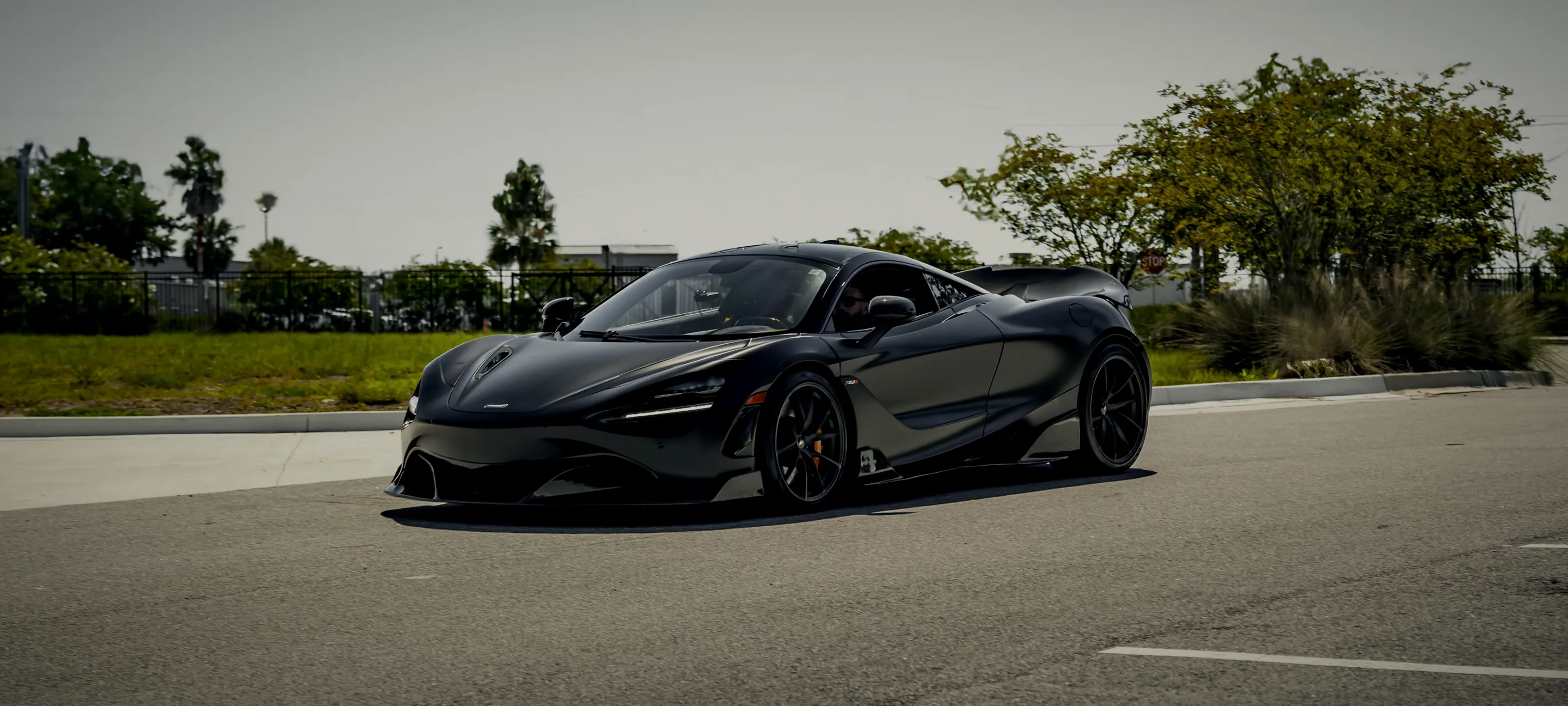
Beach cars
The ocean is a chemical, not a view.
A car parked three blocks from the Atlantic lives in a salt fog that never fully clears. Three things age paint faster here than they do inland.
It settles, and then it stays
Airborne salt lands on every horizontal panel and holds moisture against the clear coat. It is not washed off by rain — rain is what activates it. On an uncoated car it works into the paint, the trim and the wheel finish continuously, which is why beach cars dull years earlier than the same car parked in Mandarin.
Nothing between you and it
Beachside streets have very little tree cover and most parking is open. Oxidation on plastic trim, fade on a dashboard and clear coat chalking all start early here. It is the reason UV protection on this coast is doing real work rather than being a line on an invoice.
An abrasive that arrives by air
Blown sand and shell grit land on the car and sit there. Wipe a dusty beach car with a dry towel and you have effectively taken sandpaper to it — which is how the majority of swirl marks we correct on cars from the Beaches were actually put there.
Most booked from the Beaches
What Jacksonville Beach customers come for.
The mix here is different from inland Jacksonville. These are the ones that leave our bay heading east most often.
Getting here
About twenty minutes, straight up Atlantic.
Two routes work depending on where in the Beaches you start. Both land at the same door on St Johns Bluff Road.
Head west on Atlantic
Straight out of Neptune and Atlantic Beach, over the Intracoastal. If you are starting south of Beach Boulevard, take Beach west instead and turn north.
Turn at St Johns Bluff
North on St Johns Bluff Road. You are about four minutes out at this point, and past the worst of the traffic either way.
Building 400, pull up to the bay
The car goes straight inside rather than waiting on a forecourt. Drop-off and collection both happen indoors.
It is a short drive for what it buys you. Film and coatings are applied in a sealed, climate-controlled bay — the one thing that cannot be replicated in a driveway, a parking lot or a mobile unit anywhere near the coast. Mon–Fri 9:00 AM – 8:00 PM, Saturday 9:00 AM – 6:00 PM, closed Sunday.
Open in Google MapsIf you live this close to salt
The washing is the whole battle.
Protection fails at the wash, not on the road — and a car three blocks from the Atlantic needs washing more often than most.
Two indoor washes a month
- Foam bath and hand wash, done the correct way every time
- Indoors, so nothing dries and spots in the sun
- Salt film removed before it has weeks to sit
- From $79 a month
Household transferable
- Any car in the driveway, not one named vehicle
- Useful when there are two cars and one beach commute
- Service history logged to Carfax
- Change tiers as the year goes
It protects the work
- A coating lasts as long as the washing lets it
- Brush washes are what strip and scratch a coated car
- Priority on scheduling for members
- Cheaper than paying per visit at this frequency
Questions from the Beaches
What people east of the Intracoastal ask.
If yours is not here, call the shop on 904-574-4339.
Do you come out to Jacksonville Beach?
No, and that is deliberate rather than a limitation. Paint protection film and ceramic coatings cannot be applied properly in the open air — humidity, airborne salt and a single piece of grit under film are all permanent. Everything happens in our sealed indoor bay, about twenty minutes west of you on Atlantic Boulevard.
How much faster does a beach car actually degrade?
Faster than an inland car, and honestly it depends on whether it is garaged, how close to the water it sits and whether it gets rinsed. What we see consistently is trim fading and clear coat dulling earlier on cars from the Beaches than from inland Jacksonville.
Is a ceramic coating worth it this close to the ocean?
This is where it makes the most difference. Salt is the thing a coating handles best — contamination sits on the coating instead of bonding to your paint, so it rinses off rather than needing chemicals. See ceramic coating packages.
Will a coating stop sand scratching the paint?
No. A coating is microns thick and will not stop an abrasive. What stops sand and shell grit is paint protection film on the panels that take it, plus not dry-wiping a dusty car — which is how most beach-car swirls actually happen.
How often should a car near the water be washed?
Every two weeks keeps most beach cars ahead of it, more often if it lives outside. If that is the plan, a membership is two indoor washes a month and works out cheaper than booking each one.
Do you work on convertibles and soft tops?
Yes. Soft tops need their own products and their own protection, and a beachside convertible is one of the harder cars to keep right in this climate. Mention it when you book so we allow the time.
Nearby
Other areas we see cars from.
All within a short drive of the studio on St Johns Bluff Road.
Book
Twenty minutes, and the salt stops mattering as much.
Bring the car up Atlantic Boulevard and we will look at it with you — what the coast has already done, and what is worth doing about it.